Build an institution
that outlasts you.
A governance framework for nonprofit founders
who are ready to stop improvising.
Most nonprofits don't fail from lack of passion.
They fail because the systems were never built.
This course gives you the frameworks, diagnostics, and implementation tools to build an organization that functions — with or without you.
Capstone Implementation Course
- M1 The Institutional Shift From movement to institution — the framework every founder needs first
- M2 Clarity, Mission & Program Design Problem Compression Model™ and Program Integrity Model™
- M3 Governance Architecture Board composition, authority boundaries, governance toolkit
- M4 Financial Discipline & Integrity 5-layer Financial Credibility Model™ and Explainability Rule™
- M5 Systems, Documentation & SOPs How to write a 1-page SOP and the 5 non-negotiables
- M6 Evidence Discipline & Fundraising Stage-Aligned Fundraising Model™ and Impact Integrity Model™
- M7 Founder Risk & Institutional Durability Five Laws of Institutional Durability and the Durability Standard
"Things fall apart quietly when systems are absent."
Founder, Develop Africa
Built for founders
who are building to last.
This course is for you if —
- You founded a nonprofit and feel like the organization cannot function without you
- Your board exists but does not truly govern — and you are not sure how to change that
- You have been running on founder energy and know it is not sustainable
- Your financial systems work, but you could not explain every dollar to a funder in five minutes
- You have grown quickly and feel the internal strain that outsiders cannot yet see
- You are a capacity builder, consultant, or board member supporting organizations at this stage
- You lead a diaspora organization or Africa-focused nonprofit navigating institutional development from a distance
This is not for you if —
- You are looking for fundraising tactics or donor acquisition strategies — this is a governance and systems course
- You want a certificate program — this is a practitioner's implementation course, not an academic credential
- Your organization is fully institutionalized with active governance, documented systems, and distributed leadership — you are already there
- You are not willing to be honest about where your organization's structural gaps are
The structural gap
most capacity builders miss.
Most nonprofit training focuses on fundraising, program design, or communications. Almost none address the governance, financial systems, and institutional infrastructure that determine whether an organization endures.
The Structural Plateau
Your organization looks healthy from the outside — growing, visible, funded. But inside, systems lag, founder dependency deepens, and informal governance strains under the load. This is the most dangerous stage you will not see coming.
Founder Dependency
When every major decision requires your presence, scaling becomes structurally impossible. Founder dependency is not a sign of dedication. It is concentration risk — and it becomes more dangerous as the organization grows.
Governance That Is Ceremonial
A board that only ratifies decisions is not governing. An organization with impressive board names but no board member agreements, no conflict-of-interest policy, and no executive evaluation is not protected. It is exposed.
Financial Opacity
You do not lose donor trust because of mistakes. You lose it because you cannot explain them. Financial systems are not administrative burdens — they are the trust infrastructure on which every funder relationship rests.
Activity Without Evidence
Narrative-dependent organizations weaken under scrutiny. Outputs describe what you did. Outcomes describe what changed. Organizations that confuse the two cannot earn the trust of serious funders — or sustain it once earned.
Premature Scaling
Growth does not correct weakness. It exposes it. Scaling before structural proportionality multiplies what already exists — strength and fragility alike. The discipline to say "not yet" is a mark of institutional maturity.
Not theory. Architecture.
Every module ends with a structured self-assessment and implementation tool. You leave each session with something concrete — not just something to think about.
Governance architecture that distributes risk
Board member agreements, conflict-of-interest policies, executive evaluation processes, and authority boundaries — documented, implemented, and functioning.
Financial systems that are immediately explainable
The 5-layer Financial Credibility Model™ implemented across your organization. The Explainability Rule™ applied to every dollar. A board financial dashboard your board can actually read.
Operational infrastructure that functions without you
The 5 non-negotiable SOPs written, stored, and reviewed. Processes that any trained staff member can execute without asking for guidance. An organization that does not stop when you step back.
Evidence discipline that earns funder trust
Outputs and outcomes clearly defined. Measurement tools in place before programs begin. An annual impact summary that demonstrates honest stewardship — not curated highlights.
Stage-aligned fundraising that protects your reputation
The Stage-Aligned Fundraising Model™ applied to your current structural reality. Revenue diversification targets. The discipline to pursue funding your structure can actually absorb.
Institutional durability that outlasts the founder
The 90-Day Absence Test™ passed. Succession documentation in place. The Durability Standard met across all six markers. An organization that survives leadership transitions, funding volatility, and public scrutiny.
Seven modules.
One complete framework.
Each module introduces the frameworks, shows them in practice through the Develop Africa case study, and closes with a structured self-assessment. No module is optional — each builds on the last.
What the course adds
that the book does not.
The book is the theory. The course is the implementation. Neither replaces the other — together, they are the complete system.
-
Step-by-step SOP template
Module 5 walks you through exactly how to write a 1-page SOP — a practical tool not in the book.
-
Module self-assessments
Every module closes with a structured yes/no diagnostic — applied to your organization, right now.
-
From Operator to Architect™
The side-by-side comparison of operator behavior vs. architect behavior — the most important structural decision a founder makes.
-
Expansion vs. Consolidation Cycle™
The rhythm of structural catch-up that makes every expansion phase sustainable — a course-original framework.
-
The Durability Standard
Six specific markers that define whether your institution can endure beyond its founding leadership — a concrete closing diagnostic.
-
Capstone Implementation Workbook
The 18-page workbook included with the course applies every framework directly to your organization — section by section.
The book covers what the course does not
The course and book are designed to work together. The book goes deeper on formation and the full institutional story. The course goes deeper on implementation and practical application.
Choose your format.
All formats include lifetime access. No subscriptions. No recurring fees.
- Complete PDF of Mission to Systems™
- Read anywhere — phone, tablet, desktop
- No shipping · Available internationally
- 15% of royalties support Develop Africa scholarships
The Course
- 7 full video modules — 70 slides of frameworks
- 20+ proprietary frameworks and diagnostics
- Capstone Implementation Workbook included
- Module self-assessments after every session
- Course-exclusive frameworks not in the book
- Instant access · Learn at your own pace
- eBook ($9.99 value)
- Full video course — lifetime access ($197 value)
- Capstone Implementation Workbook
- Complete ecosystem — theory and implementation
15% of royalties support student scholarships in Sierra Leone
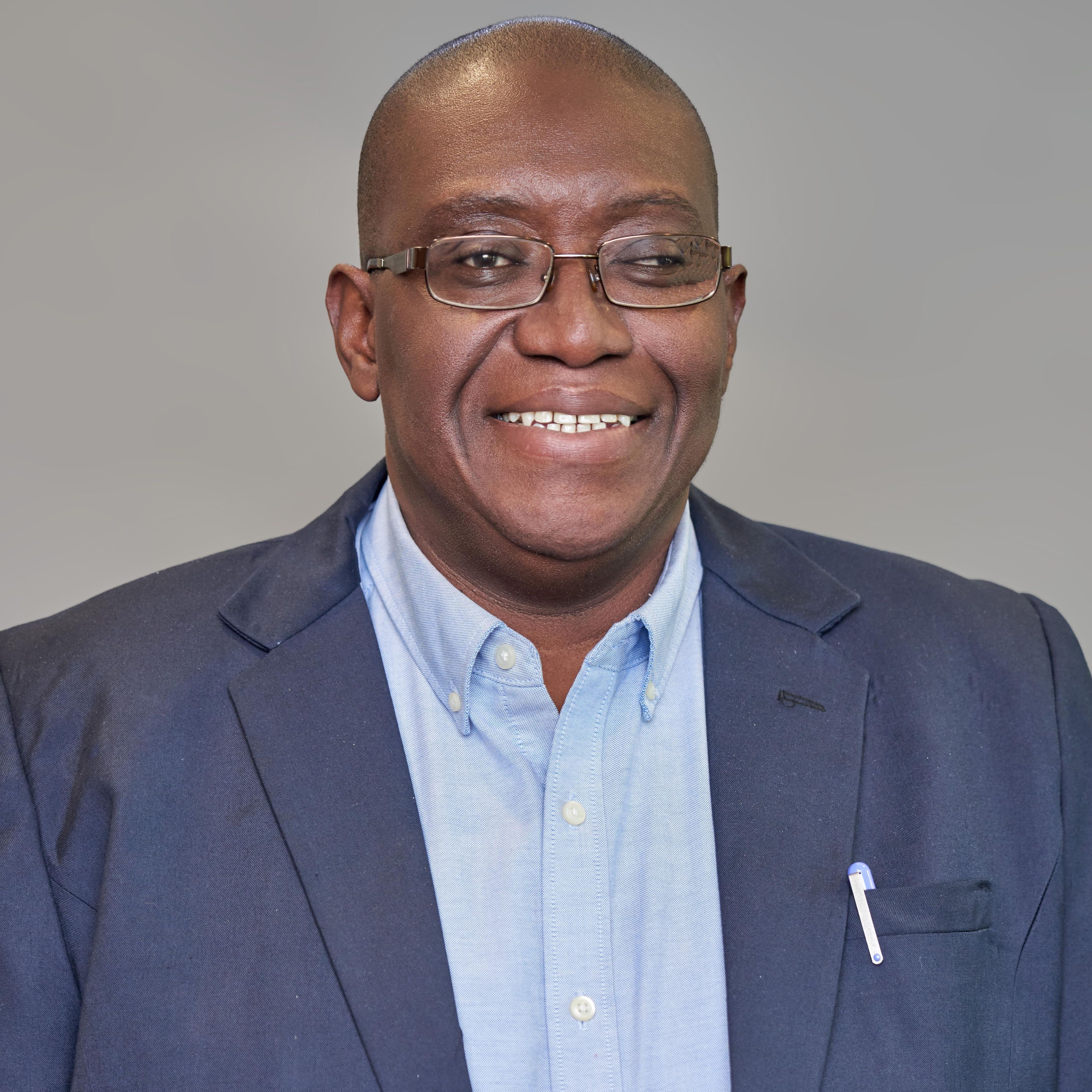
Fifteen percent of author royalties from every course enrollment and book sold support student scholarships through Develop Africa in Sierra Leone — the organization whose twenty-year institutional story this course documents. When you enroll, you fund the mission this framework was built to sustain.
Not borrowed theory.
Lived institutional practice.
Frequently asked.
The mission deserves
structure.
Every organization that endures — that survives leadership transitions, funding volatility, and public scrutiny — does so because someone chose structure over improvisation, clarity over ego, stewardship over control.
That choice is available to every founder. At any stage. At any size.